

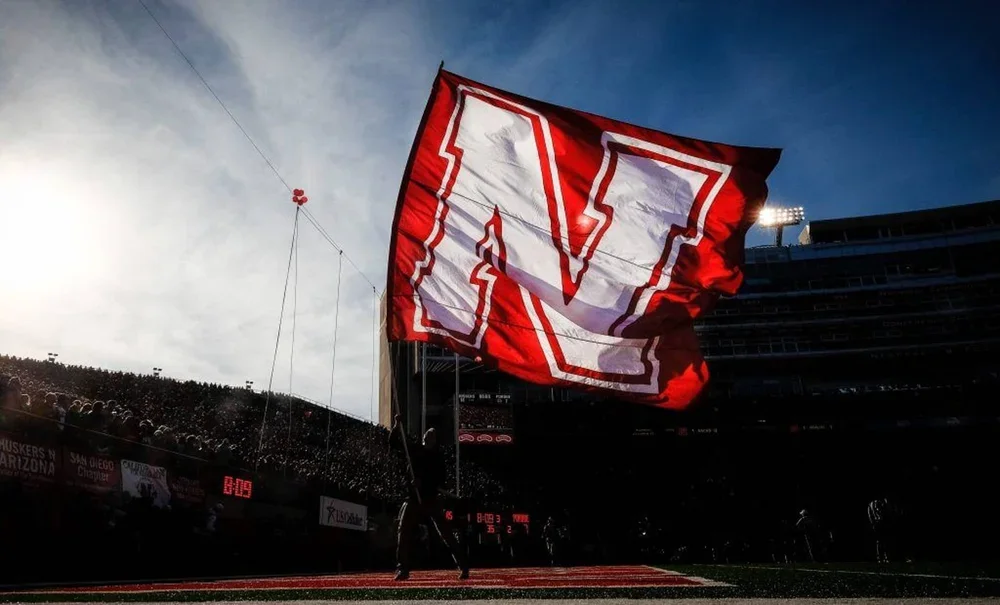
An arbitrator has upheld a decision from the College Sports Commission (CSC) that rejected name, image, and likeness (NIL) deals for 18 Nebraska football players, which were collectively valued at millions of dollars.
The ruling marks a significant milestone in college athletics, serving as the first major test of the NIL enforcement system established by the Power 4 conferences following last summer’s House vs. NCAA settlement. The case centered on PlayFly Sports, a multimedia rights company that partners with Nebraska and numerous other athletic departments. The CSC had previously denied the players’ deals, arguing that PlayFly qualifies as an “associated entity” of the school—similar to an NIL collective.
Under the House settlement, the players’ attorneys appealed the decision to arbitration. On Monday, the CSC announced that the arbitrator affirmed its interpretation, concluding that PlayFly is an associated entity and that the agreements lacked a “Valid Business Purpose.” The CSC described the arrangements as “warehousing,” meaning the company purchased the athletes’ NIL rights without lining up specific brand deals requiring the athletes to perform services.
Bryan Seeley, CEO of the College Sports Commission, commented on the ruling while attending the ACC’s Spring Meetings in Amelia Island, Florida. “I hope and expect that people at schools and those working in college athletics will view this as a positive step toward enforcing rules in this space,” he said. “I believe most people in college athletics want strong enforcement—not everyone, but most. Even if this ruling isn’t legally binding as precedent, it will shape how people think about enforcement. So, it was a good day.”
However, further challenges lie ahead for the CSC. As of April 30, 21 deals had been consolidated into three pending arbitration cases. Attorneys representing athletes with more specific or limited arguments could potentially produce outcomes unfavorable to the CSC.
In addition, Nebraska state law prohibits any organization from penalizing a college athlete for receiving NIL compensation. The Nebraska attorney general may intervene to prevent the CSC from imposing penalties on Nebraska athletes who were paid through their PlayFly deals. *The Athletic* has contacted the attorney general’s office for comment, and this story will be updated if a response is received.
Seeley noted that the players are reportedly working on new deals that would comply with the rules, allowing them to get paid without further litigation. The CSC has agreed to expedite rulings for any new agreements submitted by Nebraska players.
Later this month, U.S. Magistrate Judge Nathanael M. Cousins is scheduled to hear a motion filed by House plaintiff attorneys seeking to exempt multimedia rights companies like PlayFly from being classified as associated entities. If the judge sides with the plaintiffs, the arbitrator’s ruling against Nebraska could lose much of its force.
“I think it hopefully sets a clear path forward,” Seeley added.
